Strainers

Service Image

Strainers

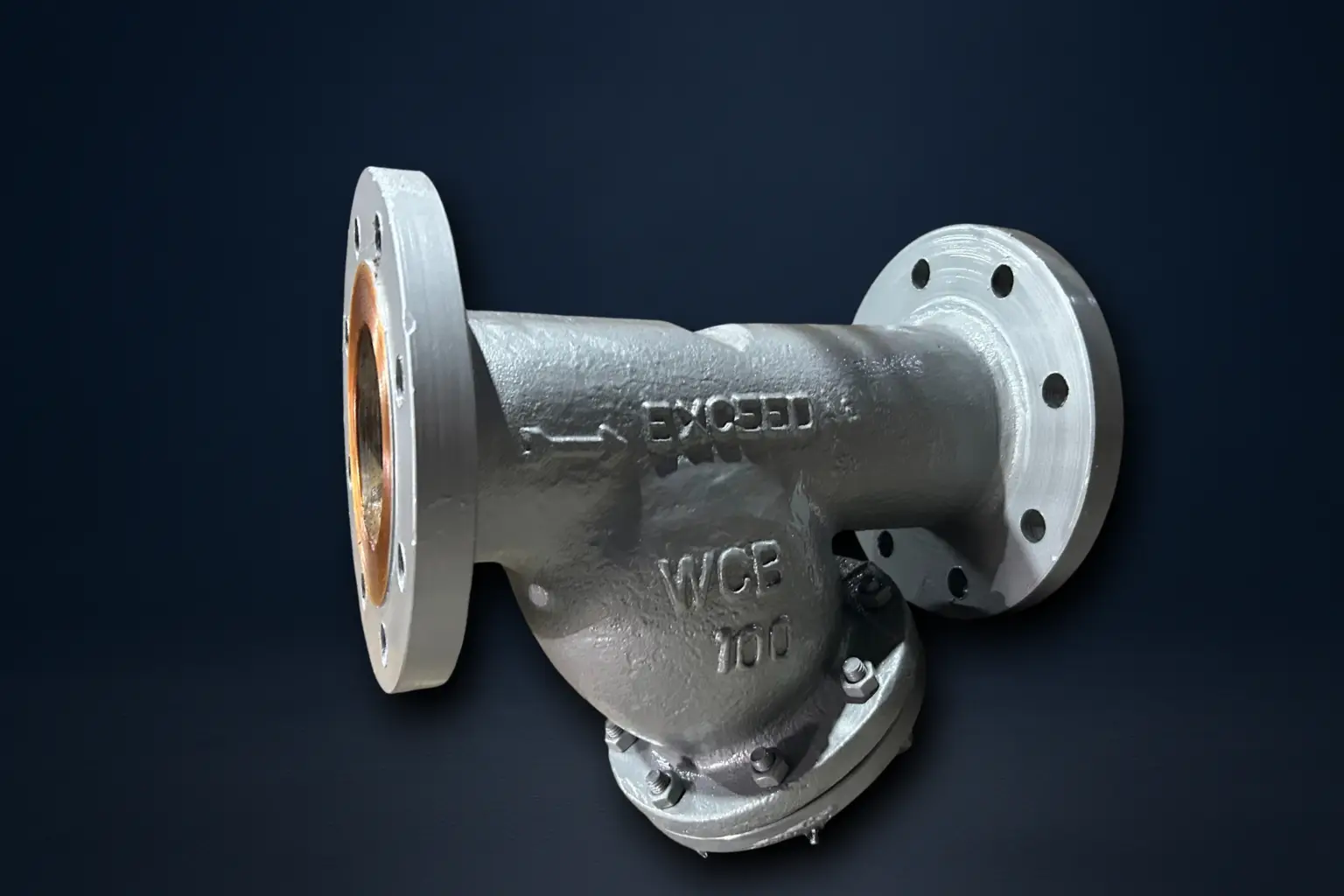
Strainers are pipeline devices designed to protect equipment by filtering out solid particles from the flow of liquids or gases. They use a perforated or mesh screen element that captures debris, preventing damage to pumps, compressors, valves, and other downstream equipment. By removing foreign matter such as scale, rust, weld slag, or dirt, strainers help maintain system efficiency, extend equipment life, and reduce maintenance costs.

Strainers are available in different configurations such as Y-type, T-type, and Basket-type, each suited to different flow conditions and maintenance needs. Their compact and reliable design makes them essential in any pipeline system where contaminants could cause wear, clogging, or malfunction.

Exceed Strainers are built with rugged housings and precision-engineered screens to ensure effective filtration and durability. Designed for easy maintenance and long service life, Exceed provides strainer solutions that safeguard critical equipment across diverse applications.


Standards

Testing Std.: API 598

Flange Dimensions: ASME B16.5


Engineering Options:

  • Custom Mesh/Perforation: Different mesh sizes or perforation diameters available to achieve the required filtration level.

The operation of a strainer is straightforward but highly effective:

  1. Flow Entry
    Fluid enters the strainer body and passes through the internal screen element.

  2. Filtration
    The screen traps unwanted particles and debris, while allowing clean fluid to continue through the pipeline.

  3. Clean Outlet
    Only filtered fluid exits the strainer, ensuring downstream components are protected.

  4. Maintenance
    Over time, collected debris can restrict flow. Strainers are designed with blow-off connections or removable covers, allowing operators to easily clean or replace the screen element without removing the strainer from the pipeline.

This simple operation provides continuous protection with minimal operator intervention, making strainers one of the most cost-effective safeguards in pipeline systems.

Strainers are commonly used:

  • Upstream of pumps – to prevent impeller damage caused by debris.

  • Before control or shut-off valves – to reduce wear and ensure proper sealing.

  • In steam, gas, and condensate lines – to protect equipment from rust, scale, or dirt.

  • In chemical and process pipelines – to keep process fluids clean and protect heat exchangers or meters.

  • In water distribution systems – to maintain reliability by preventing clogging of sensitive equipment.

  • Effective Protection
    Strainers safeguard downstream equipment by removing solid particles from the flow.
    Exceed designs screens with optimal mesh/perforation sizes for reliable debris capture and smooth flow.

  • Low Maintenance
    Simple screen elements are easy to clean or replace, keeping downtime minimal.
    Exceed provides strainers with user-friendly covers and blow-off connections for fast servicing.

  • Versatile Designs
    Different strainer types (Y, T, Basket) suit various applications and space constraints.
    Exceed manufactures a wide range of designs to meet system-specific requirements.

  • Durable Construction
    Strainers must withstand pressure, temperature, and corrosion.
    Exceed uses robust materials and precise fabrication to ensure long service life in harsh environments.

  • Cost-Effective Protection
    Preventing equipment failure and downtime saves significant maintenance costs.
    Exceed strainers deliver reliable performance at competitive costs, ensuring long-term value.

No Part Name Qty Materials
1 Body 1 ASTM A216 Gr. WCB

ASTM A351 Gr. CF8


ASTM A351 Gr. CF8M

2 Cover 1 ASTM A36 / ASTM A216 Gr. WCB

ASTM A240 Type 304 / ASTM A351 Gr. CF8


ASTM A240 Type 316 / ASTM A351 Gr. CF8M

3 Mesh 1 SS304 Double Layer Screen: Perforated base + SS304 40-Micron (325 Mesh) Inner Lining

SS316 Double Layer Screen: Perforated base + SS316 40-Micron (325 Mesh) Inner Lining


SS316 Double Layer Screen: Perforated base + SS316 40-Micron (325 Mesh) Inner Lining

4 Stud - Nuts Req. MS - MS / ASTM A193 Gr. B7 - ASTM A194 Gr. 2H

ASTM A193 Gr. B8 - ASTM A194 Gr. 8


ASTM A193 Gr. B8M - ASTM A194 Gr. 8M

5 Gasket 1 Spiral Wound Gasket with SS304 Winding and Carbon Filler

Spiral Wound Gasket with SS304 Winding and Carbon Filler


Spiral Wound Gasket with SS316 Winding and Carbon Filler

Service Rating Test Pressure
Material Class Working Pressure @ 38°C Max Temp. Shell Test
WCB

150


300

19.6 bar


51.1 bar

425°C

29.4 bar


76.7 bar

CF8/CF8M

150


300

19 bar


49.6 bar

425°C

28.5 bar


74.4 bar

Important Notes:

1) Temprature shown is the maximum service temprature of the valve. The allowable working pressure decreases as temprature increases. Always refer to the ASME B16.34 pressure-temprature ratings for the exact value at the required temprature.

2) Hydrostatic test pressures are based on API 598 requirements:

  • Body (shell) test = 1.5 x rated working pressure
Size DN F to F ØD ØRF PCD ØM N T
25 160.00 108.00 51.00 79.20 16.00 4 11.00
40 200.00 127.00 73.00 98.50 16.00 4 14.20
50 230.00 152.00 92.00 120.60 19.00 4 15.70
65 290.00 178.00 105.00 139.70 19.00 4 17.50
80 310.00 190.50 127.00 152.40 19.00 4 19.00
100 350.00 229.00 157.00 190.50 19.00 8 24.00
125 400.00 254.00 186.00 215.90 22.00 8 24.00
150 480.00 279.00 216.00 241.30 22.00 8 25.00
200 600.00 343.00 270.00 298.40 22.00 8 28.50
250 622.00 406.00 324.00 362.00 25.00 12 30.00
300 698.00 483.00 381.00 431.80 25.00 12 32.00
350 787.00 534.00 413.00 476.20 28.00 12 35.00

(Dimensions above 350mm available on request)

All dimensions are in mm